The first place
Hiroshima Peace Memorial Museum (including Atomic Bomb Dome, Peace Memorial Park, etc.) (Hiroshima City, Hiroshima Prefecture)
The Hiroshima Peace Memorial Museum was opened in 1955 with the aim of communicating the reality of the damage caused by the atomic bomb to people all over the world and contributing to the abolition of nuclear weapons and the realization of permanent world peace, which is the heart of Hiroshima. Did.
The Peace Memorial Museum, which consists of the East Building and the Main Building, collects and displays photographs and materials showing the remains of the A-bomb survivors and the tragedy of the A-bomb, and introduces the history of Hiroshima before and after the A-bomb and the situation of the nuclear age.
The Atomic Bomb Dome is a building that was bombed by a nuclear weapon that was used for the first time in human history at the end of World War II.
The Atomic Bomb Dome, which continues to stand as it was when it was bombed, conveys the devastation of nuclear weapons and is a peace monument common to all humankind that continues to appeal for the abolition of nuclear weapons and the importance of permanent peace in the world over time. ..
Peace Memorial Park is a city park established to commemorate the victims of the atomic bombing and to pray for permanent world peace.
In the park, there are the Atomic Bomb Dome, the Hiroshima Peace Memorial Museum, numerous monuments set up with the wish of peace, and the Aogiri that was bombed.
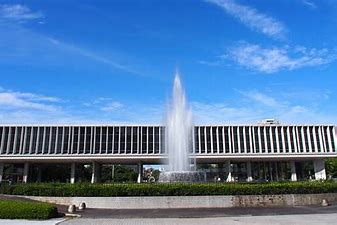
Hiroshima Peace Memorial Museum
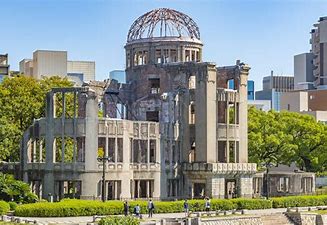
Atomic bomb dome
2nd place
Fushimi Inari Taisha Shrine (Kyoto City, Kyoto Prefecture)
Fushimi Inari Taisha Shrine, known as "Inari-san," is the main shrine of about 30,000 Inari shrines nationwide.
Its history is older than that of the Heian period, and it is said that it was founded in the 4th year of Wado (711).
It is said to have the benefits of business prosperity and family safety, and is crowded with many worshipers throughout the year.
It is also popular with overseas travelers, and in the ranking of "Japanese tourist spots popular with foreigners" by the world's largest travel word-of-mouth site announced in June 2018, it won the first place for 5 consecutive years.
The biggest highlight of the popular Fushimi Inari Taisha Shrine is the Senbon Torii.
The sight of the vermilion torii gates lined up in a row is a masterpiece.
This is due to the spread of the custom of dedicating torii gates after the Edo period, with the gratitude that the wishes "passed" or "passed".
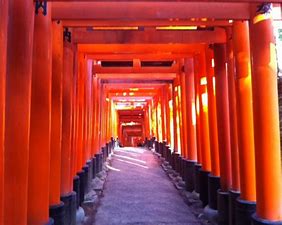
Senbon Torii of Fushimi Inari Taisha Shrine
3rd place
Hakone Open Air Museum (Hakone Town, Kanagawa Prefecture)
This is the first outdoor museum in Japan that takes advantage of the nature of Hakone.
The biggest feature is the large number of outdoor exhibitions, where art works are placed everywhere on the vast site of about 70,000 square meters, sometimes looking up at the sky, sometimes while experiencing the world view inside the art work. It is a museum where you can enjoy viewing.
Unlike ordinary museums, it is a museum where you can walk and experience while looking around. It can be enjoyed by a wide range of age groups, from families with children to traveling alone by adults.
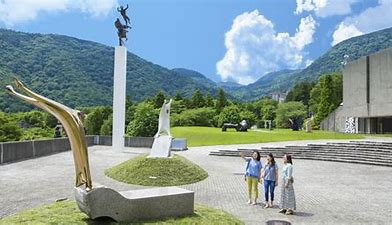
Hakone Open Air Museum
4th place
Todaiji Temple (Nara City, Nara Prefecture)
It is a representative temple built in the Nara period, which is known as the Great Buddha of Nara, and was built in the capital Heijokyo as the center of Kokubunji temples nationwide.
The Great Buddha is about 15 meters high, and the circumference of the platform that supports the Great Buddha is about 70 meters, which is an overwhelming scale.
The Great Buddha Hall is one of the largest wooden structures in the world.
A total of 23 Buddhist statues and buildings, including the world's largest wooden building, the Great Buddha Hall, have been designated as national treasures and have many other important cultural properties.
Including famous places such as the Great Buddha, Namdaemun, and the statue of King Nio, Hokkado is a national treasure, not to mention the buildings, but all the Buddha statues enshrined inside.
There are only a few places in Japan where you can see so many national treasures at once.
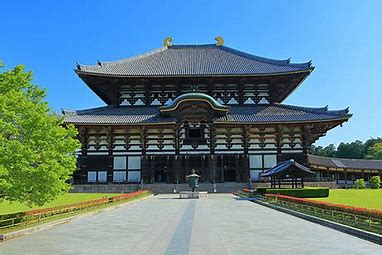
Todaiji Temple
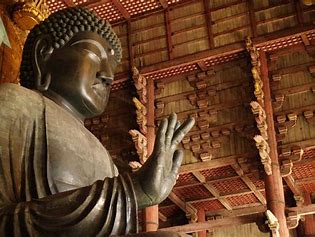
Great Buddha of Nara
5th place
Kenrokuen (Kanazawa City, Ishikawa Prefecture)
It is a strolling garden that is one of the three famous gardens in Japan along with Mito Kairakuen and Okayama Korakuen.
As a representative daimyo garden of the Edo period, it has been shaped over many years by successive lords of Kaga.
Located in the center of Kanazawa, it is a garden where you can enjoy the beauty of the four seasons, and is loved by many citizens of the prefecture and tourists from all over the world.
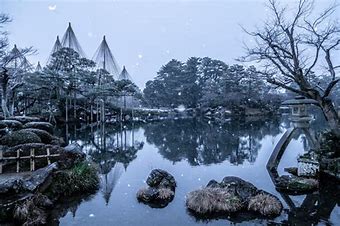
Kenrokuen in winter
6th place
Shinjuku Gyoen National Garden (Shinjuku-ku, Tokyo)
It is a typical modern Western garden of the Meiji era and is a masterpiece of landscape gardens.
It is said to have its roots in the daimyo mansion given by Kiyonari Naito, a vassal of Ieyasu Tokugawa during the Edo period.
After the Meiji Restoration, the state-owned Agricultural Experiment Station was established, and after passing through the Imperial Household Ministry, it was born as an imperial garden in 1906.
The garden, which is a skillful combination of a European-style orthopedic garden, a landscape garden, and a Japanese garden designed by a French landscaper, is a typical modern Western garden of the Meiji era and is one of the few masterpieces of landscape gardens in Japan.
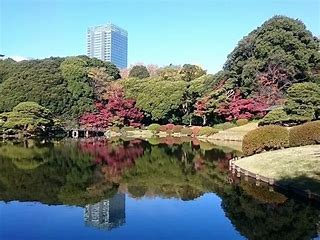
Shinjuku Gyoen
7th place
Nikko Toshogu (Nikko City, Tochigi Prefecture)
It is a shrine dedicated to Tokugawa Ieyasu, the first shogun of Tokugawa in 1617.
The precincts are lined with 55 buildings, including 8 national treasures and 34 important cultural properties, and their gorgeous beauty is overwhelming.
The buildings are decorated with lacquer and colorful colors by master craftsmen gathered from all over the country, and many sculptures are displayed on the pillars.
Most of the buildings have been designated as national treasures and important cultural properties, and in 1999, they were also registered as World Heritage Sites.
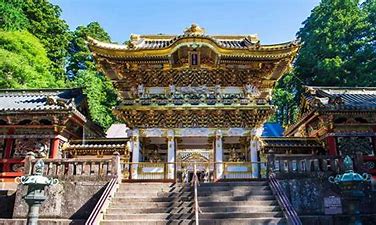
Nikko Toshogu
8th place
Dolls Museum (Kanazawa City, Ishikawa Prefecture)
In the hall that makes use of the atmosphere of a tasteful teahouse, traditional Gosho dolls, Kamo dolls and costume dolls, checkered dolls that have been loved as playmates for girls, chick dolls and May dolls that celebrate the healthy growth of children, Seto dolls such as Arita dolls and Satsuma dolls that fascinated Europe from the end of the Edo period to the Meiji era, simple craft kokeshi dolls made in the Tohoku region, Takeda dolls that are humorous actors, Japan is now a secret boom The clay dolls from all over the world and the Russian matryoshka, which is said to have roots in Japan, are on display.
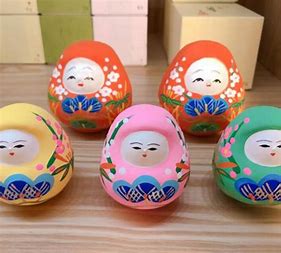
Dolls on display at the Dolls Museum
9th place
Himeji Castle (Himeji City, Hyogo Prefecture)
Its appearance in the blue sky is likened to a white egret flying out of the water, and it is also known as "Shirasagi Castle".
In addition, "the aesthetic perfection is in the highest position of Japanese wooden architecture, and it is unique in the world", "At the height of castle architecture in the early 17th century, the castle tower group It is a castle that best preserves buildings such as turrets, gates, and earthen walls, and civil engineering buildings such as stone walls and moats, and best shows the structure of Japan's unique castle that has been devised for defense. " It was highly evaluated and was registered as the first world cultural heritage in Japan in 1993.
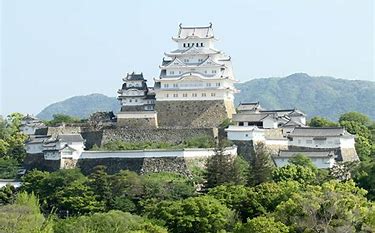
Himeji castle
10th place
Koyasan Okunoin (Koya Town, Wakayama Prefecture)
There is a mausoleum of Kobo Daishi, and it is said to be the greatest sacred place of Kobo Daishi worship.
About 2 kilometers from Ichinohashi to the mausoleum, there are more than 200,000 gravestones of various daimyo, memorial towers, and memorial monuments lined up in the cedar grove.
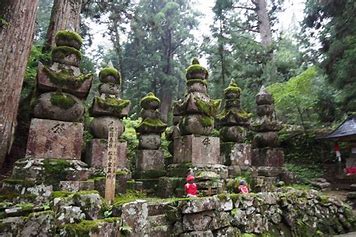
Tombstones of various daimyo of Koyasan Okunoin
11th place
Tokyo Metropolitan Government Building Observatory (Shinjuku-ku, Tokyo)
The Tokyo Metropolitan Government Building No. 1 Main Building, which has an impressive 48-story twin tower 243m above the ground, was completed in 1991, and the 45th floor of the two towers, north and south, which are separated from the 33rd floor, are free observation rooms. You can reach the observation room by direct elevator in about 1 minute.
From a height of 202m, you can see a wonderful view of the entire Kanto area.
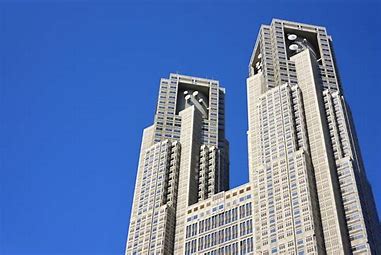
Tokyo Metropolitan Government Building
12th place
Eikando Zenrinji Temple (Kyoto City, Kyoto Prefecture)
It is a famous spot for autumn leaves in Kyoto and Okazaki, and has been touted as "Maple Eikan-do" since ancient times. ..
There are many other attractions such as the Tahoto, which overlooks the city of Kyoto, and the principal image of Mikaeri Amida.
In the surrounding area, there are many sightseeing spots that represent Kyoto, such as Nanzenji Temple and Heian Shrine.
It is a famous sightseeing spot that is indispensable for sightseeing in Kyoto in autumn.
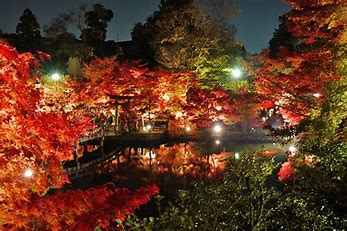
Autumn leaves of Eikando Zenrinji Temple
13th place
Shukkeien (Hiroshima City, Hiroshima Prefecture)
It is a historic daimyo garden that has been passed down since the Edo period.
It was built in the 6th year of Genna (1620), and has since been modified by successive feudal lords to become almost what it is today.
Along the way, it was hit hard by the great fires and atomic bombs of the Edo period, but it has been restored each time, and 2020 is about to reach the 400th anniversary of the construction of the garden.
Located in the center of Hiroshima city, the lush garden that makes you forget the hustle and bustle of the city is popular as a place of relaxation for many people both inside and outside Hiroshima prefecture.
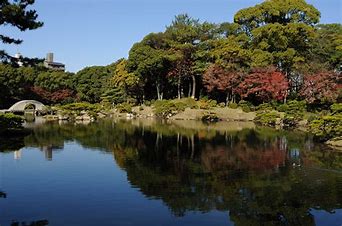
Shukkeien
14th place
Kinkakuji Temple (Kyoto City, Kyoto Prefecture)
The official name is Kinkaku-ji, and it is one of the temples of Shokoku-ji.
The shrine "Kinkaku" is especially famous, so it is generally called Kinkakuji.
It is said that the gardens and architecture centered on the Kinkakuji represented the world of paradise, and it was a stage that contributed to the development of culture by inviting Emperor Go-Komatsu, the father of the famous Ikkyu Zen Master, and by actively trading with China. , The culture of this era is especially called Kitayama culture.
After Yoshimitsu's death, it became a temple according to his will, and the temple was opened by Muso Soseki.
Kinkakuji is famous not only in Japan but also overseas because of its golden and impactful appearance.
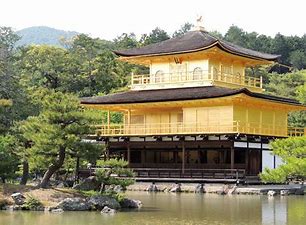
Kinkakuji Temple
15th place
Atago Nenbutsu-ji Temple (Kyoto City, Kyoto Prefecture)
It is a temple of the Tendai sect, and the mountain name is Mt.
As many as 1,200 Rakans in the precincts were carved by the hands of 1,200 ordinary worshipers for 10 years from 1979 to pray for the reconstruction of the temple.
Therefore, the oneness is very unique. I'm holding a cat, having a cup, laughing, or having a difficult face.
There is no one who is the same as Mr. Rakan, and it will calm the visitors.
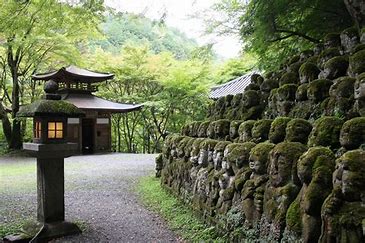
Atago Nenbutsu-ji Temple
16th place
Omotoyama Daishoin (Hatsukaichi City, Hiroshima Prefecture)
It is the oldest temple in Miyajima.
Kobo Daishi Kukai traveled to Miyajima at the head temple of the Omuro school of the Shingon sect, practiced the method of questing at Misen, and was founded in 806.
Including the principal image of Hagiri Fudo Myo, the eleven-faced Kannon Bodhisattva, the sitting statue of Fudo Myo in the Important Cultural Property, Sanki Daigongen, Seven Lucky Gods and Ichigan Daishi are enshrined.
At Misen's Reikado, the embers of Kobo Daishi's training of Homa have been burning for over 1200 years. This unextinguished fire is also famous as one of the main fires of the peace lamp in Hiroshima Peace Park, and was certified as a "lover's sanctuary" in 2009.
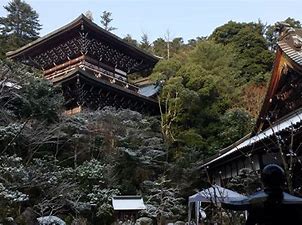
Omotoyama Daishoin
17th place
Itchiku Kubota Museum of Art (Fujikawaguchiko Town, Yamanashi Prefecture)
This museum is a permanent exhibition of the elaborate dyeing art work "Ichiku Tsuji ga Hana" by the dyer Itchiku Kubota.
Not only the works, but also the garden, buildings, and the arrangement of furniture, all express the world of Itchiku Kubota.
It is listed as "Three Stars" in the Michelin Tourist Guide.
In addition to the exhibition room for works, there is a museum shop, a cafe, a teahouse, and an exhibition room for glass beads.
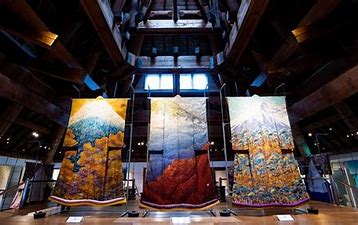
Itchiku Kubota Museum
18th place
Miyajima (Itsukushima) (Hatsukaichi City, Hiroshima Prefecture)
Miyajima has long been worshiped as the "Island of God."
On the island of history and romance floating in the Seto Inland Sea, the elegant shrine of Itsukushima Shrine and the large torii gate painted in red are in perfect harmony with the dark blue sea and the nature of the island, creating the elegance of the Heian Dynasty.
Miyajima has a long history since it was worshiped as "God's Island", and many people who remain in history have worshiped it.
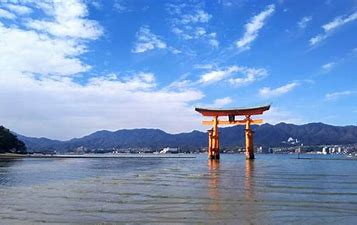
Miyajima
19th place
Jigokudani Yaen-Koen (Yamanouchi Town, Nagano Prefecture)
Jigokudani Yaen-Koen is located in the Yokoyu River valley, which originates from the Shiga Kogen in Joshinetsu Kogen National Park, in the northern part of Nagano Prefecture.
At an altitude of 850 meters, almost one-third of the year is covered with snow.
The steep cliffs, the steam of hot springs rising from everywhere, and the ancient people who saw such a scene called this place Jigokudani.
However, this is a paradise for monkeys, and since ancient times, a herd of Japanese macaques has lived in this area in its natural state.
Since its opening in 1964, Jigokudani Yaen-Koen has been widely loved by people all over the world as a place where you can observe the interesting ecology of Japanese macaques up close and as a monkey entering a hot spring.

Jigokudani Yaen-Koen Monkey
20th place
Nezu Museum (Minato-ku, Tokyo)
The Nezu Museum is a museum created to preserve and display the collection of Japanese and Oriental antiquities collected by the first Kaichiro Nezu (1860-1940), a businessman who served as the president of Tobu Railway.
Approximately 7,400 collections, including seven national treasures, range from paintings, calligraphy, sculpture, ceramics, lacquer work, and metalwork.
You can also enjoy a stroll through the 17,000 m2 Japanese garden, which retains the remnants of the Nezu family's private residence.
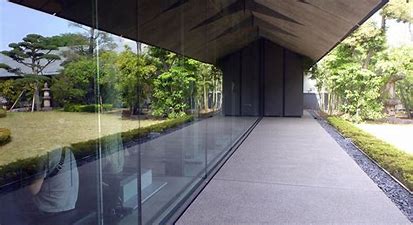
Nezu Museum
21st place
Nara Park (Nara City, Nara Prefecture)
From the spacious precincts of Kasuga Taisha, Kofukuji, and Todaiji in the eastern part of Nara city, to Kasuga Okuyama, which has been untouched by humans since the Heian dynasty, and is overgrown with primitive forests, it extends about 4km east-west and about 2km north-south. It is a vast park.
Covered by a beautiful lawn and a 1000-year-old pine grove, about 1,300 deer are playing in a herd.
The path that Omiya people walked through, sung by Manyoshu such as Tobihino and Yukigenosawa, still remains quietly.
Behind it are Mt. Wakakusa, Mt. Kasuga, and Mt. Takamado, which have gentle grass, and blue mountains that gently embrace the ancient city of Nara.
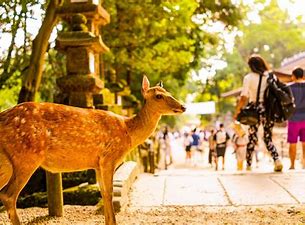
Deer in Nara Park
22nd place
Sanjusangendo (Kyoto City, Kyoto Prefecture)
The official name of Sanjusangendo is the main hall of the Renkaouin, a temple that enshrines the principal image of the Renkaou, that is, Senju Kannon.
As a Buddhist temple outside the precincts of the Tendai Sect Myohoin, it owns 1001 Senju Kannon statues, and its power attracts visiting worshipers.
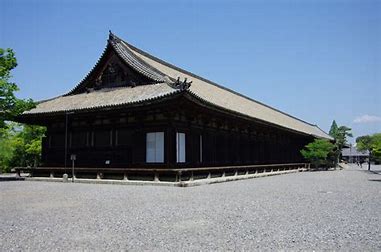
Sanjusangendo
23rd place
Sensoji Temple (Taito-ku, Tokyo)
Of the many temples in Tokyo, Sensoji Temple, which is probably the most famous and often seen in photographs, is the oldest Buddhist temple in Tokyo.
From the precincts, the five-storied pagoda, and the approach to the incense sticks, which have been visited by worshipers for centuries, you can feel the same atmosphere as before.
Sensoji Temple is located in the center of Tokyo, but has a downtown atmosphere, shops and architecture that make you feel Japanese, and among them, the temple that many people visit as the main sightseeing spot.
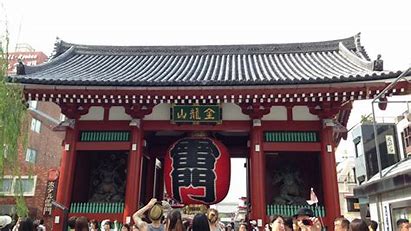
Kaminarimon Gate at Sensoji Temple
24th place
Kyoto Railway Museum (Kyoto City, Kyoto Prefecture)
Based on the basic concept of "a railway cultural base that walks with the community," it is one of the largest railway museums in Japan that can be enjoyed by everyone from children to adults as a place that creates excitement, inspiration, and intellectual curiosity.
53 valuable vehicles including the steam locomotive that was stored and exhibited at the Umekoji Steam Locomotive Museum are stored and exhibited.
The exhibited vehicles include the first 0 series Shinkansen train, the 500 series Shinkansen train that realized commercial operation at 300 km / h and was listed in the Guinness Book, and the largest C62 steam locomotive of the national railway that drove the postwar limited express train. We have a collection of vehicles with historical value, such as cars.
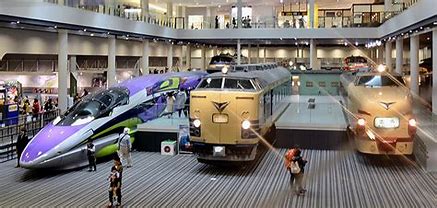
Kyoto Railway Museum
25th place
Chureito Pagoda (Fujiyoshida City, Yamanashi Prefecture)
It is a memorial tower for the war dead on the hillside of Mt. Arakura in Fujiyoshida City, Yamanashi Prefecture.
The area around the Churei Tower is maintained as Arakurayama Sengen Park managed by Fujiyoshida City.
In mid-April, more than 650 Yoshino cherry trees in the park bloom all at once, and many tourists from home and abroad visit the park as a place where you can see the five-storied pagoda, cherry blossoms, and Mt. Fuji.
Arakurayama Sengen Park, where the loyal pagoda is located, is located on the hillside of Mt. You can get a panoramic view of the city of Fujiyoshida.
Especially in the cold winter season, you can see the beautiful snow-covered Mt. Fuji under the clear blue sky.
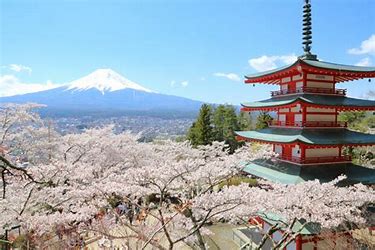
Chureito and Mt. Fuji
26th place
Hasedera (Kamakura City, Kanagawa Prefecture)
It is a tourist attraction in Kamakura known as a famous place for hydrangea, plum blossoms, and autumn leaves.
It was founded in 736 (Nara period). In Kamakura, it is an old temple along with Sugimotodera. The eleven-faced Kannon (Hase Kannon) with a height of 9.18 m is one of the largest wooden Kannon in Japan, and the Bonsho is designated as an important cultural property designated by the country.
Daikokuten (the god of wealth) enshrined in Daikoku-do is one of the seven deities of good fortune in Enoshima, Kamakura.
Beyond the main hall with the eleven-faced Kannon, there is a hill with a good view, and from the hill you can enjoy a view of Sagami Bay and the Miura Peninsula.
In addition, this hill is known as a flower temple where hydrangea flowers bloom so that hydrangea flowers cover the slope during the rainy season, and in addition to hydrangea, seasonal flowers bloom.
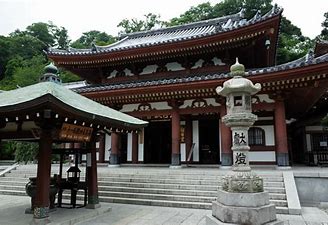
Hasedera
27th place
Ritsurin Garden (Takamatsu City, Kagawa Prefecture)
Ritsurin Garden, which is the largest of the cultural property gardens designated as a national special place of scenic beauty, was completed nearly 300 years ago as the villa of the Matsudaira clan, the lord of the Takamatsu domain, after repeated renovations by successive lords.
With 6 ponds and 13 artificial hills skillfully arranged against the backdrop of deep green Shiunyama, it has excellent land division and stonework as a strolling garden in the early Edo period, and is rich in the elegance of wood and stone.
Blessed with seasonal features such as spring, summer, autumn and winter, the flowers that bloom here bring out a variety of beauty that is said to be a step-by-step view along with 1,000 splendidly maintained pine trees.
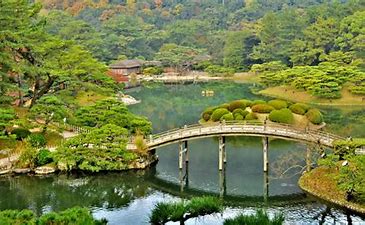
Ritsurin Garden
28th place
Nakasendo Magome-juku (Nakatsugawa City, Gifu Prefecture)
It is a post town along a slope with cobblestones.
The Magome area of Nakatsugawa City, Gifu Prefecture, is located at the southern tip of the Central Southern Alps, almost in the center of Japan, and is an area where you can enjoy the landscape of satoyama with paddy fields and forests spread out in a sloped terrain.
The highway "Nakasendo" that opened in the early Edo period runs through the center of the area, and this old highway that continues from Kyoto is a steep road that preserves the scenery of the Edo period called "Kisoji" at the end of the local post station "Magome-juku". It enters a section of about 80 km and extends further to Tokyo.
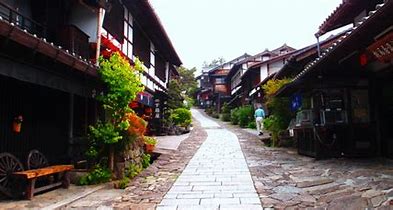
Nakasendo Magome-juku
29th place
Oirase Gorge (Towada City, Aomori Prefecture)
Lake Towada and the Oirase Gorge are one of the representative scenic spots of Towada Hachimantai National Park.
It is also known as a famous place for fresh greenery and autumn leaves, and is full of people who come to enjoy the four seasons and to heal the tiredness of everyday life, especially during the season.
In the flow of about 14km from Konoguchi of Lake Towada to Yakeyama, rich trees and dozens of waterfalls, beautiful streams of ever-changing, various strange rocks, and strange wins create stunning mountain stream beauty every season. You can enjoy the natural beauty of.
The fresh green leaves start to change color from May to June, and the autumn leaves start to change color in early October, and the best time to see them is from mid to late October.
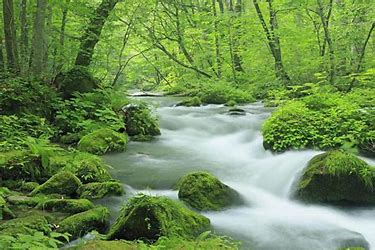
Oirase Gorge
30th place
Misen (Hatsukaichi City, Hiroshima Prefecture)
It is recognized as a World Heritage Site along with Itsukushima Shrine, and because it is a low mountain with a height of 535m, it is a mountain that is crowded with tourists all year round as a mountain that you can easily enjoy on a day trip with Itsukushima Shrine.
From the observatory, you can see the islands of the Seto Inland Sea, and you can also see the unique vegetation of the Misen Primitive Forest, which is a national natural monument.
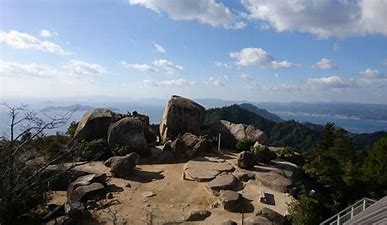
Misen