The Chubu region is located in the central part of Honshu, and is located between the Tohoku region, the Kanto region, and the Kinki region.
The Chubu region is located in the central part of Honshu and is sandwiched between the Tohoku region, the Kanto region, and the Kinki region.
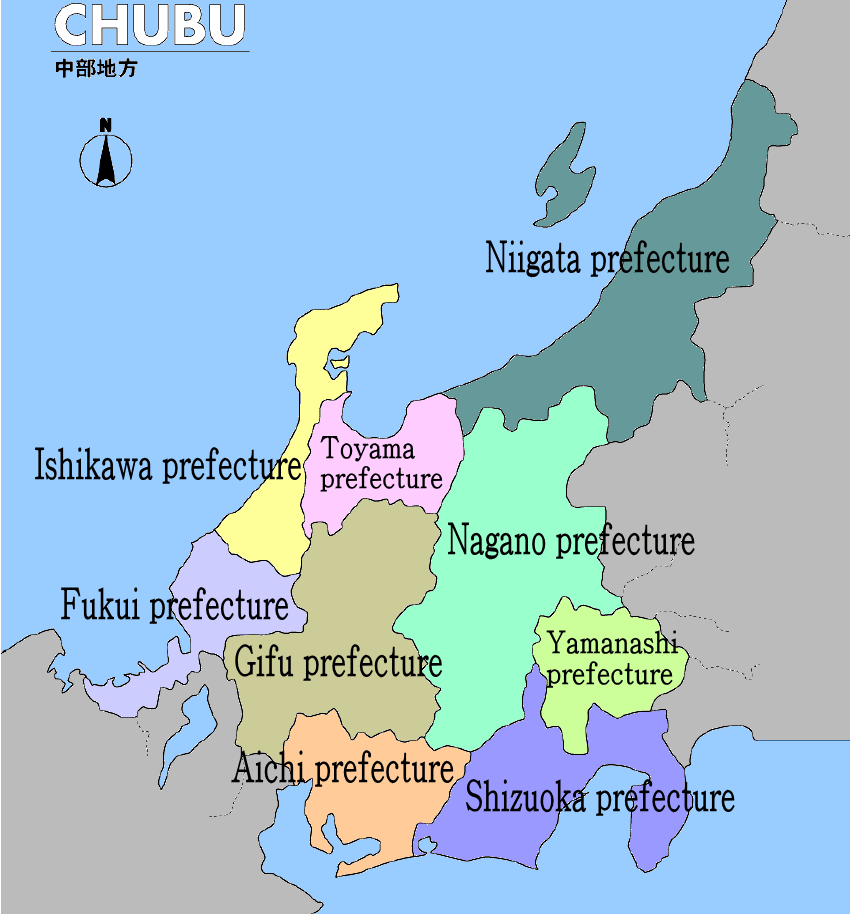
There are four prefectures facing the Sea of Japan: Niigata prefecture, Toyama prefecture, Ishikawa prefecture, and Fukui prefecture.
There are three prefectures located inland: Yamanashi prefecture, Nagano prefecture, and Gifu prefecture.
There are two prefectures facing the Pacific Ocean, Shizuoka prefecture and Aichi prefecture.
The Chubu region consists of a total of nine prefectures.
The largest city is Nagoya City in Aichi Prefecture, which is the third largest city in Japan.
Chubu Centrair International Airport (commonly known as Centrair) in Tokoname City, Aichi Prefecture is the gateway to the sky in the Chubu region.
There are 9 prefectures in the Chubu region, and the west side is strongly influenced by Osaka, but the east side is strongly influenced by Tokyo.
Therefore, the characteristics of the west side and the east side are very different, and the ties as one region are not so strong.
The map of the Chubu region is as follows.
The charm of the Chubu region
As I wrote earlier, there are nine prefectures in the Chubu region, and each prefecture has its own unique characteristics rather than its regional characteristics.
Delicious food for each region
Food culture differs greatly between prefectures facing the Sea of Japan, prefectures located inland, and prefectures facing the Pacific Ocean.
Prefecture facing the Sea of Japan
Famous for seafood from the Sea of Japan
The four prefectures of Niigata, Toyama, Ishikawa, and Fukui face the Sea of Japan and are rich in seafood from the Sea of Japan.
The seafood of the Sea of Japan is the crab.
You can eat delicious crabs anywhere in these four prefectures, but the most famous one is "Echizen Crab", which is said to be the king of crabs in Fukui Prefecture.
"Echizen Crab" is a male snow crab that is landed at a fishing port in Fukui Prefecture. It is known for its sweet and savory meat quality, and is known as the finest variety of the top brand among snow crabs.
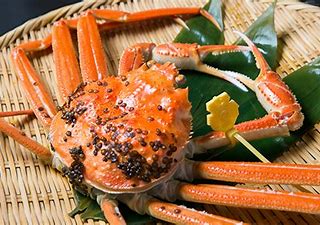
King of crabs, "Echizen crab" in Fukui prefecture
In Toyama Prefecture, "white shrimp", which is called the jewel of Toyama Bay, and "firefly squid", which emits blue light when landed in Toyama Bay, are very famous.
Other famous seafood in the Sea of Japan are the yellowtail, which has passed through the rough seas of the Sea of Japan and is tight, and the blackthroat seaperch (official name is blackthroat seaperch).

"Firefly squid" in Toyama Bay, Toyama Prefecture
Lots of delicious food besides seafood
The four prefectures of Niigata, Toyama, Ishikawa, and Fukui are not limited to seafood.
There are many delicious foods in each prefecture.
In Niigata prefecture, the soba noodles called "Hegi soba", which uses seaweed called cloth seaweed as a binder and has a characteristic texture of smooth and chewy noodles, are famous.
Among the sweets, the local confectionery "Sasa Dango", which is made by wrapping anko in wormwood dumpling dough and wrapping it in bamboo grass, is famous.
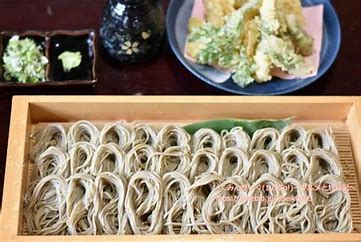
"Hegi Soba" in Niigata Prefecture
Toyama Prefecture is famous for its ramen called "Toyama Black Ramen," which is characterized by its black appearance and salty soup with a punch of thick soy sauce.
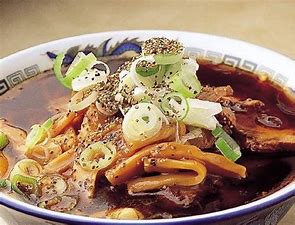
"Toyama Black Ramen" in Toyama Prefecture
Ishikawa Prefecture is the largest city on the Sea of Japan side in Kanazawa, where the prefectural office is located, and is a treasure trove of delicious food.
"Kanazawa Curry" is a B-class gourmet that represents Kanazawa.
The basic style is to put cutlet and shredded cabbage on a rich roux, and a fork or spork on a stainless steel bowl, and shops such as "Curry Champion" and "Turban Curry" are famous.
In addition, "Kanazawa Oden", which contains seeds unique to Kanazawa such as crab face, carrot, and babylonia, is also famous.
Kanazawa is said to be the area that eats the most oden in Japan, and there are many izakaya that have oden all year round regardless of the season.
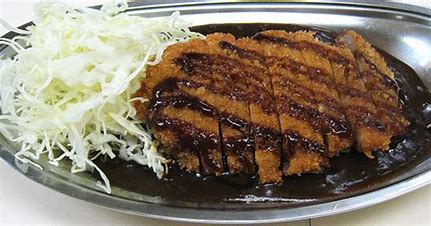
"Kanazawa Curry" in Ishikawa Prefecture
Fukui Prefecture is one of Japan's leading soba restaurants where you can eat delicious soba noodles.
The Katsudon, "Sauce Katsudon", which is unique to this area, is also famous.
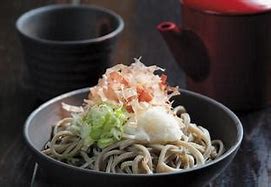
"Echizen grated soba" in Fukui prefecture
Prefecture located inland
Yamanashi, Nagano, and Gifu prefectures are sealess prefectures without the sea.
Therefore, there are no seafood, but the food culture is centered on agricultural products such as wheat.
In addition, Yamanashi and Gifu prefectures are separated from each other in the east and west across Nagano prefecture. Yamanashi prefecture has a food culture close to the Kanto region, and Gifu prefecture has a food culture close to the Kinki region.
Here, we will look at each prefecture.
Yamanashi Prefecture
Yamanashi Prefecture is in contact with Tokyo, Saitama and Kanagawa prefectures in the Kanto region, and is strongly influenced by the food culture of the Kanto region.
Since it is close to Saitama and Gunma prefectures, which do not have the same sea in the Kanto region, they tend to have similar food cultures.
Udon was a specialty of Saitama and Gunma prefectures, but the most famous food in Yamanashi prefecture is a dish called hoto, which is similar to udon.
"Hoto" is a dish of wide noodles made by kneading wheat flour, simmered with vegetables and meat, and the standard ingredient is pumpkin.
In Fujiyoshida City, which spreads out at the foot of Mt. Fuji, the thick handmade noodles "Yoshida no Udon" made with famous water are a specialty.
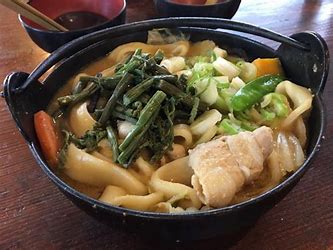
Yamanashi Prefecture's specialty dish "hoto"
Nagano Prefecture
Nagano prefecture is very famous as a soba restaurant.
The conditions for delicious soba are met, such as the cool climate suitable for making soba and the deliciousness of water.
You can eat delicious soba here and there in the prefecture, but Togakushi soba in the northern part of Nagano city is famous and is one of the three major soba in Japan.
In addition, Nagano's representative soul food is famous for its local cuisine, "Oyaki," which is made by wrapping ingredients such as vegetables in a dough kneaded with flour such as wheat, millet, buckwheat, and rice.
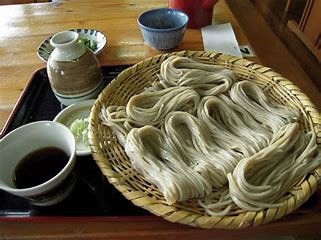
Japan's three major soba noodles, "Togakushi soba" in Nagano prefecture
Gifu Prefecture
Gifu Prefecture also has many specialty gourmet foods.
The representative is the brand beef "Hida beef" that represents Gifu prefecture.
It is a Japanese black beef raised in the Hida region, and the pink and white mottled Hida beef with sashimi is characterized by its good melting in the mouth so that it melts in the mouth and does not even have a texture.
How to eat steak and sukiyaki is popular.
For ramen, "Takayama ramen" is popular, which uses sauce soup made by boiling soup and sauce together, and uses thin curly noodles for a light soy sauce base.
Kei-chan, a local dish of chicken and vegetables such as onions and cabbage, goes well with white rice and goes well with sake, and has become very popular recently.
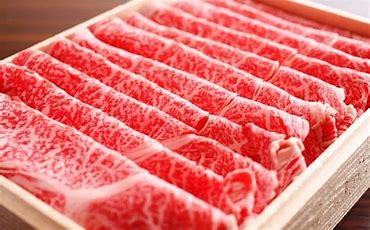
Gifu Prefecture's luxury brand beef "Hida beef"
Prefecture facing the Pacific Ocean
Two prefectures, Shizuoka and Aichi, face the Pacific Ocean and are rich in seafood.
In addition, Shizuoka prefecture is adjacent to the Kanto region, Aichi prefecture is adjacent to the Kinki region, Shizuoka prefecture has a food culture close to the Kanto region, and Aichi prefecture has a food culture close to the Kinki region.
Here, we will look at each prefecture.
Shizuoka Prefecture
Shizuoka Prefecture faces the Pacific Ocean and has various coastlines such as the Izu Peninsula, Suruga Bay, Enshu Nada, and Lake Hamana, with a total length of 647 km.
There are various specialties such as "Shirasu", "Sakura shrimp", "Splendid alfonsino", "Mutsu", "Tuna", "Katsuo", "Aji", "Mackerel", and "Squid".
You can enjoy all kinds of seafood dishes, such as oysters, seaweed, and eels.
Lake Hamana is famous for "eels".
Lake Hamana, a brackish lake with a mixture of freshwater and seawater, is the most famous eel producing area in Japan.
Recently, the famous "Hamamatsu dumplings" are made by arranging dumplings in a frying pan in a circle and baking them, and then boiled bean sprouts in the circular space left in the center.
In addition, there are many delicious foods such as "Shizuoka Oden" which is characterized by black soup stock and "Fujinomiya Yakisoba" which is a popular local gourmet that won the B-1 Grand Prix for the second time in a row.
Also, what you should not forget is "tea".
Shizuoka Prefecture is the number one producer of "tea" in Japan, and "Shizuoka Tea", the Japanese tea in Shizuoka Prefecture, is a must-try item.
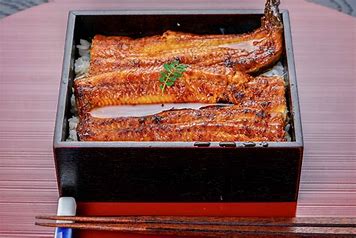
"Unagi Kabayaki", a specialty of Lake Hamana in Shizuoka Prefecture
Aichi prefecture
Nagoya, the prefectural capital of Aichi Prefecture, is the third largest city in Japan and has a unique food culture.
Aichi Prefecture is a region where miso culture is deeply rooted, and many dishes using red miso called "Hatcho Miso" are served.
Nagoya is a treasure trove of delicious food, as the word "Nagoya Meshi" refers to the specialty food of Nagoya City, Aichi Prefecture, which is known as a gourmet battleground.
"Hatcho Miso", a dish that uses red miso, is famous for "miso katsu," "miso nikomi udon," "miso oden," and "doteyaki."
As for noodles, in addition to the popular taste "Kishimen" that has been popular in Nagoya for a long time, "Ankake Spa" where thick pasta fried in oil is covered with tomato-flavored soup, and recently, soup based on soy sauce, minced pork "Taiwan ramen," which is rich in garlic, is popular as a stir-fried ingredient of garlic, spicy sauce, and green onions.
The chicken called "Nagoya Cochin", the top brand in Aichi prefecture, is also famous, and its eggs are delicious.
Oyakodon, where you can enjoy these two at the same time, is a very popular menu.
In addition, the local dish "Hitsumabushi" in Nagoya City, Aichi Prefecture, which is made by finely chopping eel kabayaki and mixing it with rice, is also well known.
There are still many Aichi specialties.
Aichi Prefecture is a treasure trove of really delicious food.
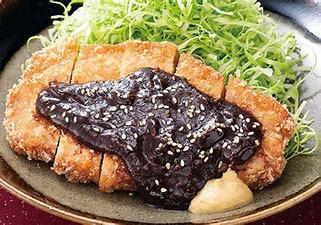
Aichi Prefecture's specialty "Miso-katsu"
Lots of sightseeing spots to see
In the Chubu region, there are many sightseeing spots to see in each prefecture.
We will introduce each area of prefectures facing the Sea of Japan, inland, facing the Pacific Ocean, inland, and facing the Pacific Ocean.
Prefecture facing the Sea of Japan
Niigata Prefecture
For a limited time, we recommend the Nagaoka Festival Large Fireworks Festival, which is held every year on August 2nd and 3rd at the Shinano Riverbed.
The total number of visitors for the two days was 1.03 million, and the number of fireworks launched was about 20,000, making it the largest fireworks display in Japan.
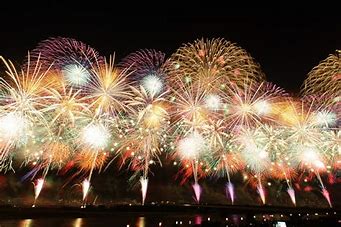
"Nagaoka Festival Fireworks Festival" in Niigata Prefecture
Toyama Prefecture
The Tateyama Kurobe Alpine Route, one of the world's leading mountain sightseeing routes that runs through the Northern Alps at an altitude of 3,000 m that connects Toyama and Nagano, is a popular spot where you can easily enjoy the spectacular scenery created by nature while connecting various vehicles. is.
Among them is the "Kurobe Dam," which was completed in 1963 over the course of seven years with 171 martyrs.
At that time, the struggle of Kurobe Dam construction, which was said to be a difficult construction of the century, especially the story of tunnel construction, has become a movie and is a very popular tourist spot.
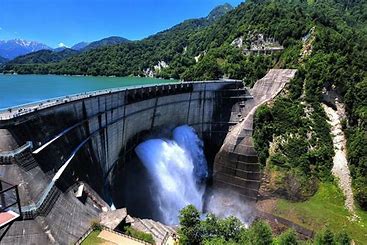
"Kurobe Dam" in Toyama Prefecture
Ishikawa Prefecture
"Kenrokuen" in Kanazawa is one of the three great gardens of Japan, and various landscapes spread out in a large site such as a fountain, a waterfall, and a pond.
It is a sightseeing spot that you can enjoy all year round, such as cherry blossoms in spring, shaved ice in summer, colored leaves in autumn, and snow in winter.
Especially in winter, "Yukitsuri" is famous for holding the branches with ropes so that the branches of the trees will not break due to the adhesion of snow.
Another popular spot is the Higashi Chaya District, which retains the atmosphere of the Edo period in the area where the cobblestone roads and latticed buildings of Kanazawa continue.
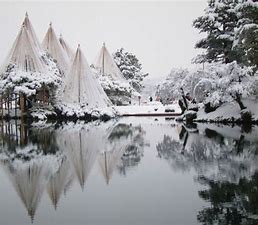
"Yukitsuri", a winter specialty of "Kenrokuen" in Kanazawa City, Ishikawa Prefecture
Fukui prefecture
Tojinbo is famous for its columnar cliffs that jut out into the Sea of Japan for more than 1km.
It is designated as a national scenic spot and a natural monument, and the Araiso promenade (about 4 km) continues on the cliff.
In addition, a sightseeing boat operates from just below, and Tojinbo seen from the sea is a different scenery.
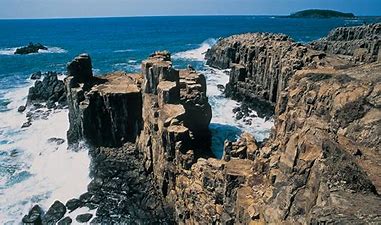
Fukui Prefecture's famous "Tojinbo"
Prefecture located inland
Yamanashi Prefecture
After all, it is the symbol of Japan, the famous peak "Mt. Fuji".
Mt. Fuji straddles Shizuoka and Yamanashi prefectures, and has a different atmosphere when viewed from either prefecture.
Looking at Mt. Fuji from the Yamanashi side, when you look at the five lakes of Fuji such as "Lake Kawaguchi" and "Lake Yamanaka" in front of you, Mt. Fuji is reflected on the surface of the water and you can enjoy a very beautiful view.
In particular, "Lake Yamanaka" is the closest to Mt. Fuji, which is located at an altitude of about 1,000 m. It is the largest lake in the Fuji Five Lakes and is popular with tourists throughout the four seasons.
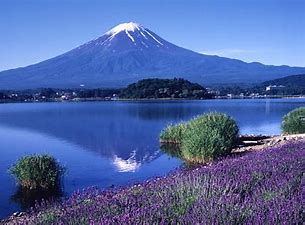
Mt. Fuji seen from Lake Kawaguchi in Yamanashi Prefecture
Nagano Prefecture
Nagano Prefecture has a large number of mountainous areas, including the Japanese Alps, so there are many beautiful landscapes.
One of the most famous is Kamikochi, which is known for one of Japan's leading plateau walking courses.
From early summer to autumn, it is crowded with many tourists and you can see various alpine plants and butterflies.
Kappa Bridge, a wooden suspension bridge with a width of 3.1 m and a length of 36.6 m, which is a symbol of Kamikochi over the Azusa River, is also a popular spot.
The national treasure "Matsumoto Castle" in Matsumoto City, "Zenkoji" and "Togakushi Shrine" in Nagano City are also very popular spots.
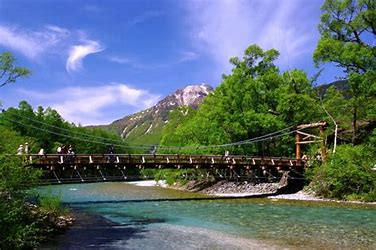
Kappa Bridge in Kamikochi, Nagano Prefecture, over the Azusa River
Prefecture facing the Pacific Ocean
Shizuoka Prefecture
After all, it is the symbol of Japan, the famous peak "Mt. Fuji".
Mt. Fuji straddles Shizuoka and Yamanashi prefectures, and has a different atmosphere when viewed from either prefecture.
The point when looking at Mt. Fuji from Shizuoka Prefecture is that you can see Mt. Fuji along with the sea.
From the top of Nihondaira, which has been ranked first in the 100 Best Tourist Destinations in Japan, you can overlook Suruga Bay, the Izu Peninsula, and the city of Shimizu with Mt. Fuji in front of you.
In addition, "Miho no Matsubara", which is one of the three major pine trees in Japan and has more than 30,000 pine trees on the coastline of about 7km, and "Lake Hamana" in the western part of Shizuoka prefecture, which is famous for eel farming, are also popular. It's a spot.
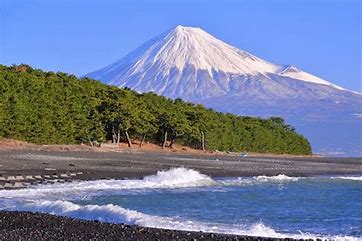
Mt. Fuji seen from Miho no Matsubara, Shizuoka Prefecture
Aichi prefecture
Atsuta Jingu, a historical shrine that holds many swords as well as national treasures and important cultural properties, is popular, as is one of Japan's three famous castles. It's a spot.
Toyota City is the birthplace of Toyota, which is famous for automobiles, and the Toyota Commemorative Museum of Industry and Technology, where you can observe valuable exhibits and demonstrations related to textile machinery and automobiles, is also a hidden popular spot.
Inuyama Castle, a national treasure of Inuyama City, and Okazaki Castle of Okazaki City are also famous.
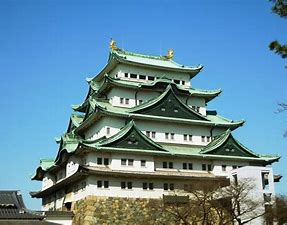
"Nagoya Castle" in Nagoya City, Aichi Prefecture
There are many famous hot springs
The Chubu region is centered on large mountains such as the Japanese Alps and Mt. Fuji, and has many active volcanoes.
The fruit of Mt. Fuji is actually a volcano.
Therefore, there are many famous hot springs in the Chubu region.
Let's look from the Sea of Japan side.
Niigata Prefecture
Yasunari Kawabata's "Snow Country" stage "Echigo Yuzawa Onsen", famous for receiving the Nobel Prize in Literature, and "Myoko Kogen"
"Akakura Onsen" and "Tsukioka Onsen" known as Bijin no Yu are famous.
Toyama Prefecture
The hot spring village "Unazuki Onsen", which boasts the largest scale in Toyama Prefecture, and "Ogawa Onsen", which springs beside a clear stream, are famous.
Ishikawa Prefecture
The historic sea hot spring "Wakura Onsen" and "Yamashiro Onsen", "Yamanaka Onsen", and "Katayamazu Onsen" in Kaga Onsenkyo are famous.
Fukui prefecture
"Tojinbo Onsen" in Tojinbo, a scenic spot on the cliff, and "Awara Onsen", which is about 30 minutes by car from Tojinbo, are famous.
Yamanashi Prefecture
The hot spring village "Ishiwa Onsen", which can be reached from Shinjuku in Tokyo in about an hour and a half, "Kawaguchiko Onsen" with a beautiful view of Mt. Fuji, and "Yumura Onsen" known as a hot spring for beautiful skin are famous.
Nagano Prefecture
"Tokura Kamiyamada Onsen", which is known as one of the leading hot spring villages in Nagano Prefecture, "Tateshina Onsen" in Tateshina Onsenkyo, and "Nozawa Onsen", which is known as a traditional hot spring town, are famous.
Gifu Prefecture
Gero Onsen, which has a history of more than 1000 years, and Hida Takayama Onsen, which is famous for its old townscape, are famous.
Shizuoka Prefecture
Atami Onsen, which has a history of more than 1500 years, Ito Onsen, which has a rich hot spring atmosphere, and Atagawa Onsen, where hot springs flow from all over the town, are famous.
Aichi prefecture
The hot springs "Nishiura Onsen" on the Nishiura Peninsula that juts out into Mikawa Bay and "Miya Onsen" on the Atsumi Peninsula are famous.
The Chubu region has little ties as a region, and has different aspects on the Sea of Japan side, inland area, and Pacific side, and the culture is also different on the Kanto region side and Kinki region side.
In other words, it is a region with different attractions in each prefecture.
Please visit the prefecture that has the charm that suits you.