Shikoku is one of the four major islands along with Hokkaido, Honshu, and Kyushu, which make up the Japanese archipelago, and is the smallest of these.
It is located on the south side of the Chugoku region of Honshu, with the Seto Inland Sea on the north side and the Pacific Ocean on the south side.
It is composed of four prefectures, Tokushima prefecture, Kagawa prefecture, Ehime prefecture, and Kochi prefecture, and the total population of these four prefectures is about 3.72 million.
Shikoku has a sunny climate, and four prefectures dominate the top four in the national ranking of the number of sunny days
The map of Shikoku is as follows.
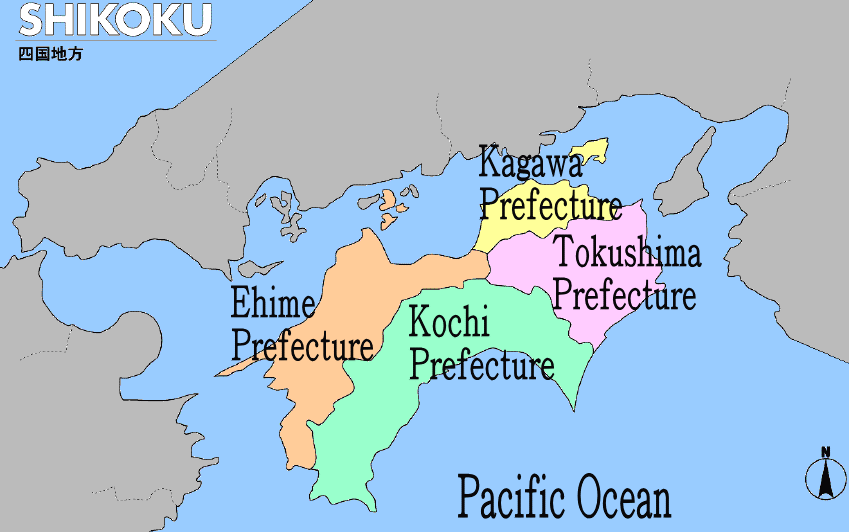
There is no empty gateway from overseas in Shikoku, but from Hiroshima prefecture on the Honshu side to Ehime prefecture via the "Shimanami Kaido", from Okayama prefecture to Kagawa prefecture via the "Seto Ohashi", and from Hyogo prefecture to "Akashi Kaikyo Ohashi". It is connected to Tokushima prefecture through "" and is easily accessible.
In addition, from Haneda Airport in Tokyo, you can fly to each prefecture in Shikoku, making it easy to access from Tokyo.
The charm of Shikoku
Shikoku, which is sandwiched between the Seto Inland Sea and the Pacific Ocean, offers not only the sea, but also the mysterious scenery of the seasonal scenery and valleys of the Shikoku Mountains that stretch from east to west.
In addition, the four prefectures of Tokushima, Kagawa, Ehime, and Kochi, which make up Shikoku, are unique tourist spots in Japan, with historical buildings such as hot springs and castles, and gourmet food.
Lots of delicious foods that are unique to each prefecture
Shikoku has a different climate with the Shikoku Mountains running from east to west in the center, and there are many delicious foods that are unique to each region.
Let's look at each prefecture.
Tokushima Prefecture
The chicken called "Awao Chicken", which has the largest number of shipments and market share in Japan, is famous, and its meat quality is sweet and rich, making it perfect for yakitori and roasted peaches.
Noodles are also famous, such as "Tokushima ramen", a pork bone soy sauce soup, and "Iya soba", which has a strong flavor with few connections and is inherited in Japan's three major unexplored regions.
In addition, seafood such as the finest brand sea bream "Naruto sea bream", the pale and elegant taste "sea bream", and the high-class abalone "black abalone" are also famous.
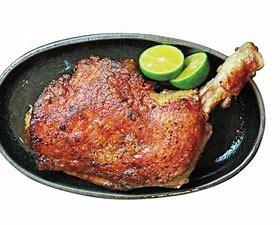
Roasted Awao chicken thighs
Kagawa Prefecture
Speaking of Kagawa prefecture, it is "Sanuki udon".
Kagawa prefecture is so famous for udon that it is called "Udon prefecture".
There are many small shops, various ways to eat, and reasonable prices, making it a gourmet representative of Kagawa prefecture.
In addition to udon, the local gourmet "Bone-in chicken" that originated in Marugame City and the premium beef "Olive beef" that was raised with squeezed olive fruits are also famous.
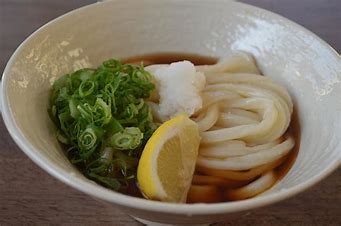
Sanuki udon "bukkake"
Ehime Prefecture
The famous "Uwajima red sea bream" is made by mixing fresh red sea bream sashimi from Uwajima with a sauce made from soup stock, soy sauce, sake, egg yolk, etc., placing it on hot rice, and sprinkling it with condiments.
On the other hand, unlike "Uwajima sea bream", "sea bream", which is not sashimi of sea bream but is cooked with rice by putting a whole sea bream in a clay pot or a kettle, is also famous as a traditional dish.
In addition, "Jakoten", which is a small fish with its bones and skin, ground and fried in oil, and vinegared rice made with soup stock and sweet vinegar from small fish, such as conger eels "Matsuyama-zushi", which serves seafood such as shrimp and octopus in Setouchi, broth egg and conger eel, is also popular.
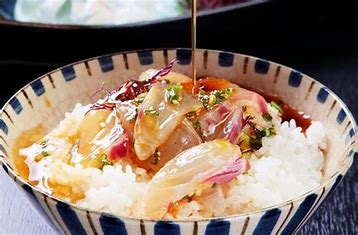
Uwajima Taimeshi
Kochi Prefecture
The classic gourmet food in Kochi prefecture facing the Pacific Ocean is "Katsuo no tataki".
"Katsuo no tataki" is a dish in which fresh bonito is roasted with its skin on, and it is said that the onboard cooking, in which Tosa fishermen quickly roasted the bonito that they had just caught and sprinkled with salt, was the beginning. I am.
In addition, Kochi's representative local cuisine, "Sawachi cuisine," is also famous, where sashimi, bonito flakes, and sushi are served on a large plate.
In addition to seafood, Nabeyaki Ramen, which is a clear chicken glass soup and thin straight noodles, and Tosa Jiro, a local chicken that Kochi Prefecture is proud of, are famous.
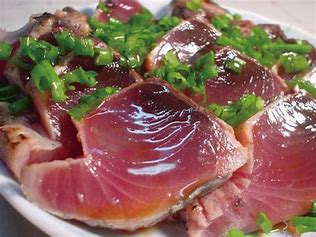
Katsuo no tataki
Lots of famous tourist attractions, festivals and hot springs
Shikoku 88 Pilgrimage Site Tour
Visit Shikoku by visiting 88 sacred sites related to Kobo Daishi (Kukai) scattered around Awa (Tokushima Prefecture), Tosa (Kochi Prefecture), Iyo (Ehime Prefecture), and Sanuki (Kagawa Prefecture). It's a journey.
Humans have 88 worldly desires, and it is said that by visiting 88 places in the Shikoku Pilgrimage, the worldly desires disappear and the wishes come true.
Tokushima Awa (Shinshin Dojo 1 to 23), Kochi Tosa (Training Dojo 24 to 39), Ehime Iyo (Bodai Dojo 40 to 65), Kagawa Sanuki (Nirvana Dojo 66 to 88) ), And finally head to Mt. Takano.
This pilgrim is called "Ohenro-san", and we often see this "Ohenro-san" in Shikoku.
Recently, it is very popular with foreigners, and you can see foreigners "Ohenro-san".
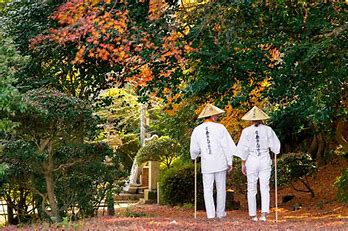
Ohenro-san
Popular tourist spots
The Otsuka Museum of Art, located in Naruto City, Tokushima Prefecture, is a museum that reproduces world-famous paintings with porcelain panel paintings. It is a very popular museum.
At temples and shrines, Kotohiragu Shrine in Kagawa Prefecture, which has long been known as "Sanuki no Konpira-san," is revered as the guardian deity of the sea and has many worshipers.
In the castle, "Matsuyama Castle" in Matsuyama City, Kochi Prefecture, which is counted as one of the three major simultaneous Hirayama Castles in Japan along with Himeji Castle and Wakayama Castle, the entire castle ruins are designated as national historic sites and are prefectural historical parks. "Kochi Castle" in Kochi City, Kochi Prefecture is famous.
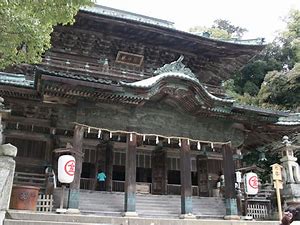
Kotohiragu Shrine
"Awa Odori", one of the three major Bon festival dances in Japan and the three major festivals in Shikoku
Awa Odori is a traditional performing art that Tokushima is proud of in the world, which is said to have a history of over 400 years, and now Awa Odori is held all over the country.
Every year from August 12th to 15th, it is one of the leading events in Japan, with more than 1 million tourists visiting from home and abroad.
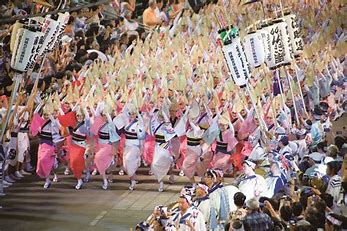
Awa Odori
Nationally famous "Dogo Onsen"
The hot springs are famous for "Dogo Onsen" in Matsuyama City, Ehime Prefecture.
The hot springs have a long history and are said to be the oldest hot springs in Japan. They are known nationwide as the setting for Soseki's novel "Botchan" and as a hot spring with a drum tower and a shrine that informs the time.
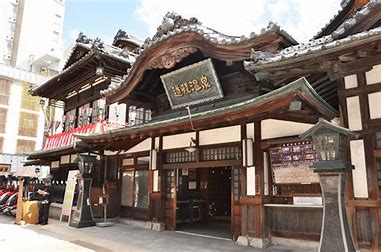
Dogo Onsen
It can be said that Shikoku is not a place full of charm as a modern city like Tokyo or Osaka, but a place full of calm historical charm based on Buddhist elements such as visiting the 88 sacred sites in Shikoku.
If you have time, please visit Shikoku.